Showing 21 Result(s)
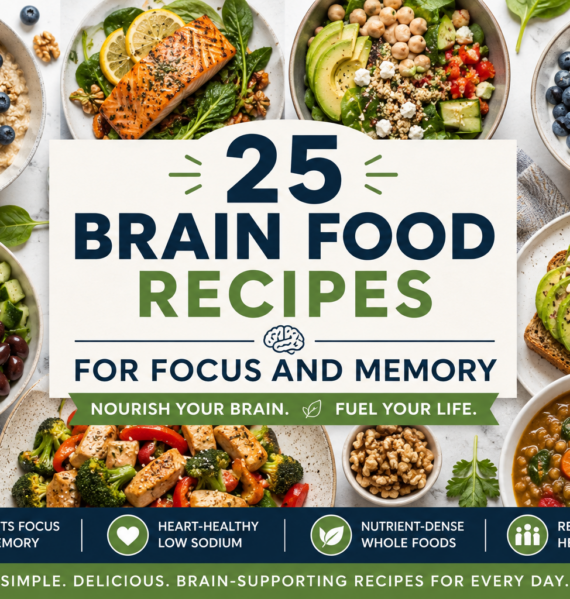
Brain food recipes featuring nutrient-rich ingredients that support memory, focus, mood, and healthy aging.

25 Brain Food Recipes for Focus and Memory

These brain food recipes are designed to support focus, memory, mood, and healthy aging through balanced nutrition. By combining protein, healthy fats, fiber, and nutrient-dense ingredients, these meals help fuel your brain while fitting into a practical everyday lifestyle.

If you’ve ever walked into a room and forgotten why you were there, struggled to concentrate during the afternoon, or found yourself searching for words that used to come easily, you’re not alone.

While no single food can prevent cognitive decline or guarantee perfect memory, research continues to show that nutrition plays an important role in supporting brain health throughout life.

The brain is one of the most energy-demanding organs in the body. It requires a steady supply of nutrients, healthy fats, antioxidants, vitamins, minerals, and stable blood sugar to function at its best.

That’s why the best brain food recipes focus on whole foods that support circulation, reduce inflammation, provide steady energy, and help protect brain cells from oxidative stress.

Below are 25 brain food recipes that combine these principles while fitting into the Recipe Shop approach to healthy eating.

What Makes a Recipe Brain Healthy?

Brain-supporting meals often include:

  • Omega-3 fatty acids
  • Antioxidant-rich vegetables and fruits
  • Healthy fats
  • Lean proteins
  • High-fiber carbohydrates
  • Low-sodium ingredients
  • Stable blood sugar support

These nutrients help support focus, concentration, memory, mood, and overall cognitive health.

25 Brain Food Recipes for Focus and Memory

1. Blueberry Walnut Overnight Oats

Blueberries contain antioxidants that may help protect brain cells from oxidative stress, while walnuts provide plant-based omega-3 fats.

2. Turkey and Avocado Rice Cakes

Lean protein and healthy fats work together to support stable energy and mental focus throughout the day.

3. Cottage Cheese with Pineapple and Walnuts

Protein, healthy fats, and natural sweetness make this a brain-friendly snack or breakfast.

4. Chicken Waldorf Salad

Apples, walnuts, and lean chicken create a combination of antioxidants, healthy fats, and protein.

5. Lentil and Vegetable Soup

Fiber-rich lentils help support blood sugar stability while vegetables provide brain-supporting nutrients.

6. Greek Chicken Bowls

Protein, vegetables, and healthy fats help create sustained energy without the afternoon crash.

7. Roasted Salmon with Vegetables

Omega-3 fatty acids found in salmon are among the most studied nutrients for brain health.

8. Shrimp and Avocado Salad

Healthy fats and lean protein support concentration and satiety.

9. Egg and Spinach Breakfast Scramble

Eggs provide choline, an important nutrient involved in memory and brain function.

10. Mediterranean Tuna Salad

Rich in omega-3s and antioxidants, this classic meal supports healthy aging.

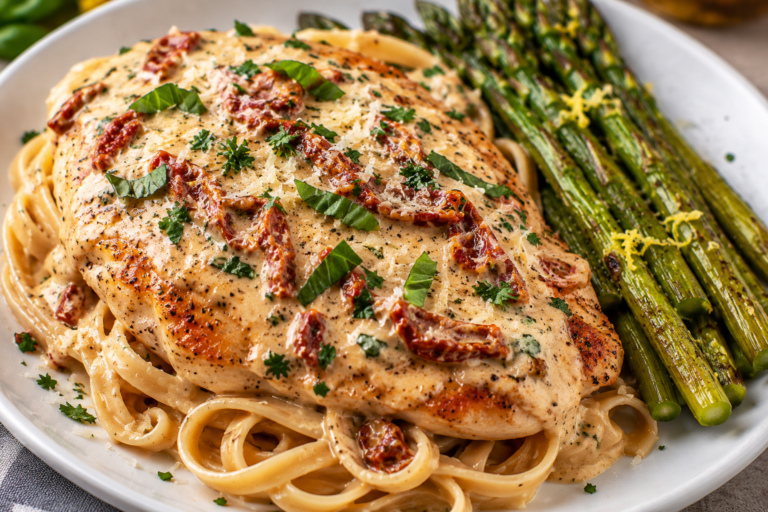
11. Zucchini Noodle Alfredo with Roasted Chicken

A lower-carb alternative that helps maintain more stable energy levels.

12. Berry Greek Yogurt Parfait

Protein and antioxidants make this a smart choice for supporting cognitive performance.

13. Chicken Veggie Rotini Salad

Vegetables, lean protein, and fiber help fuel both body and mind.

14. Grilled Shrimp Skewers with Vegetables

Colorful vegetables provide antioxidants that help protect brain cells.

15. Turkey Meatloaf with Roasted Vegetables

A comforting meal packed with protein and nutrients.

16. Avocado Chicken Salad Lettuce Wraps

Healthy fats support brain function while reducing reliance on processed carbohydrates.

17. Spinach and Mushroom Frittata

Leafy greens provide nutrients associated with healthy cognitive aging.

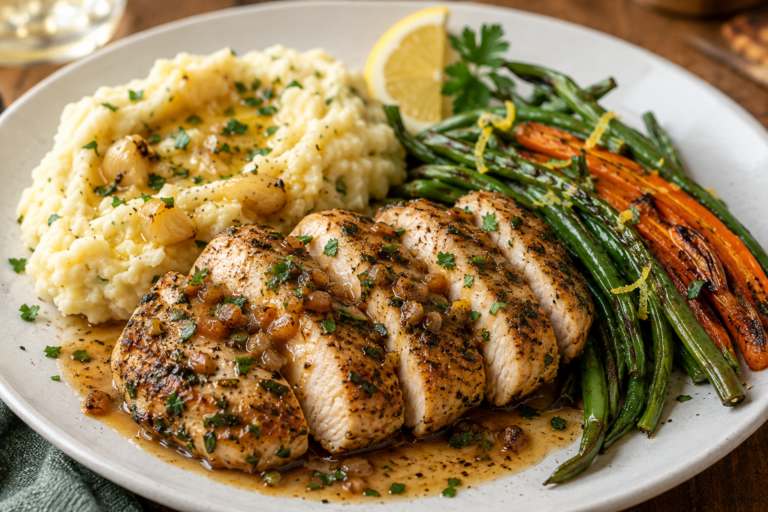
18. Garlic Herb Chicken with Green Beans

A simple, nutrient-dense dinner that supports overall wellness.

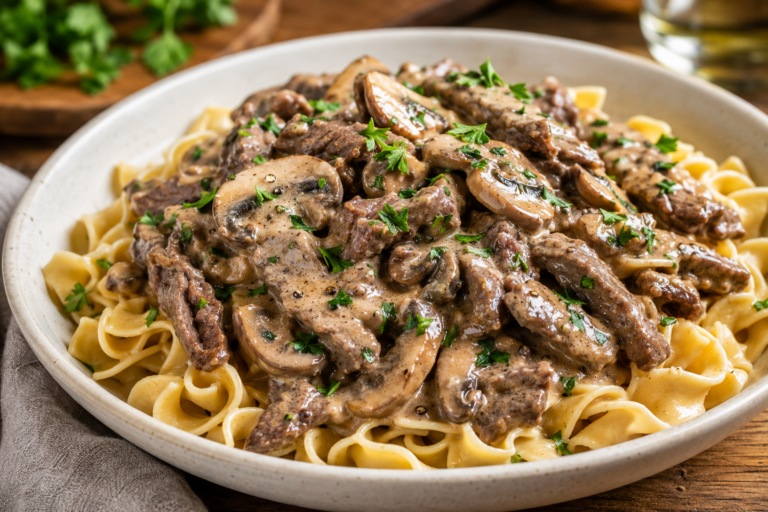
19. Beef and Vegetable Stir Fry

Iron, protein, and vegetables help support healthy energy production.

20. Walnut Crusted Chicken

Walnuts add brain-supporting fats and satisfying texture.

21. Greek Yogurt Chicken Salad

High protein and healthy fats help support concentration.

22. Mediterranean Chickpea Bowl

Fiber and plant-based nutrients support stable blood sugar and gut health.

23. Berry Spinach Smoothie Bowl

Antioxidants and vitamins help combat oxidative stress.

24. Roasted Vegetable Quinoa Bowl

A nutrient-rich meal packed with fiber and minerals.

25. Cottage Cheese Power Bowl

Protein-rich and satisfying while supporting stable energy.

The Connection Between Blood Sugar and Brain Health

One of the most overlooked factors in mental clarity is blood sugar balance.

Sharp spikes and crashes can contribute to:

  • Brain fog
  • Difficulty concentrating
  • Energy swings
  • Mood fluctuations
  • Increased cravings

That is one reason many of the recipes on Recipe Shop are built around the 45/500 Framework™—approximately 45 grams of carbohydrates and 500 milligrams of sodium per meal. This approach helps create meals that are satisfying, practical, and supportive of long-term wellness.

Foods That Support Memory and Focus

When planning meals, focus on including:

  • Fatty fish
  • Walnuts
  • Blueberries
  • Leafy greens
  • Eggs
  • Olive oil
  • Lean proteins
  • Colorful vegetables
  • High-fiber foods

These ingredients appear consistently in eating patterns associated with healthy cognitive aging.

Ready to support your brain with practical, delicious meals?

Explore the Brain & Mood Meal Plan to discover low-sodium, balanced-carb recipes designed to promote focus, mental clarity, stable energy, and healthy aging.

View the Brain & Mood Meal Plan →

Final Thoughts

Brain health isn’t determined by a single meal.

It is shaped by thousands of choices made over time.

The good news is that every meal is an opportunity to provide your brain with nutrients that support focus, memory, mood, and healthy aging.

By choosing recipes built around whole foods, balanced nutrition, and stable energy, you can support both your body and your mind for years to come.

Explore Recipe Shop’s growing collection of brain-friendly recipes and discover how simple, practical nutrition can help you feel your best every day.

The Story Behind Recipe Shop - founder caring for her mother after a cardiac arrest inspired the creation of the 45/500 Framework and shoppable low sodium recipes.

The Night That Changed Everything: Why I Built Recipe Shop

How My Mother’s Cardiac Arrest Led to the Creation of Recipe Shop

I never planned to build a recipe website.

In fact, the night Recipe Shop began had nothing to do with recipes.

It started when I came home and immediately felt that something wasn’t right.

All the lights were on.

The front door was unlocked.

Food was sitting on the table.

At first, none of those things seemed unusual. My mother lives with me, and I assumed she was somewhere in the house.

I let the dog outside.

I sorted through the mail.

But something felt off.

I hadn’t heard her.

The house was quiet.

Too quiet.

I called her name.

No answer.

I checked her bedroom.

Her bathroom.

Her closet.

Upstairs.

Downstairs.

Nothing.

Panic started creeping in.

I even went outside and looked near the trash cans because I was afraid she might have fallen.

I called my sister to see if she knew where Mom was.

She didn’t.

Then I called the nearest hospital.

That’s where she was.

The Phone Call That Changed Everything

My mother had suffered a sudden cardiac arrest.

Doctors later determined that a virus had caused fluid to build up in her lungs, overwhelming her heart.

They revived her, but she was struggling.

She was placed on a respirator and treated with IV antibiotics while doctors worked to stabilize her.

The virus was never definitively identified, but its impact on our family was undeniable.

Everything changed.

When she finally came home, she wasn’t the same person who had left.

She came home with a weakened heart and a new diagnosis of diabetes.

Like many families, we immediately started asking questions.

What should she eat?

What foods would support her recovery?

How could we help protect her heart moving forward?

And perhaps the biggest question of all:

How do you completely change the way you eat overnight?

Looking for Answers

We expected clear guidance.

Instead, we found confusion.

Every article seemed to say something different.

Food labels were overwhelming.

The most consistent advice we received from healthcare professionals was to aim for approximately 45 grams of carbohydrates and around 500 milligrams of sodium per meal.

That became our target.

The problem was figuring out how to actually live that way.

That’s when we started reading labels.

And honestly, what we found shocked us.

Sodium was everywhere.

Foods marketed as healthy often contained incredible amounts of salt.

Convenience foods were loaded with sodium.

Even some meal kits and prepared meals that sounded healthy didn’t fit the nutritional goals we were trying to achieve.

The more we looked, the harder it became to find food that worked.

Rebuilding Meals From Scratch

My sister and I decided to stop searching for the perfect solution and start building one ourselves.

We modified family recipes.

We tested substitutions.

We compared nutrition labels.

We experimented with ingredients.

And when something didn’t work, we started over.

Again.

And again.

And again.

Eventually we built a growing collection of recipes that fit the nutritional targets we had been given while still tasting like meals real people would actually enjoy eating.

Because let’s be honest.

If healthy food tastes terrible, nobody sticks with it.

Why the Recipes Had to Be Shoppable

There was another problem.

Convenience.

Before all of this happened, I already preferred meal services and recipe kits because they saved time.

I didn’t want to spend hours wandering grocery store aisles.

I didn’t want to manually build shopping lists every week.

I didn’t want healthy eating to become a second full-time job.

I wanted a system.

I wanted recipes.

I wanted shopping lists.

I wanted ingredients delivered or ready for pickup.

I wanted to be able to follow recipes directly from my phone while cooking.

So that’s exactly what we built.

An Unexpected Outcome

Then something happened that gave us hope.

When my mother left the hospital, her cardiologist told us she would likely be on heart medications for the rest of her life.

Given what she had been through, we accepted that reality.

About six months later, she returned for follow-up testing.

Her heart scans came back normal for her age.

The same woman who had suffered a sudden cardiac arrest, been placed on a respirator, and left the hospital with a weakened heart was taken off all of her heart medications.

While I would never claim that diet alone caused that outcome, the experience reinforced something we already believed:

The foods we eat matter.

Why Recipe Shop Exists Today

By that point, the recipes, shopping tools, and meal-planning system we had created weren’t just helping my mother.

They had become part of our everyday lives.

And they still are.

I continue to use Recipe Shop every week.

I continue adding new recipes every week.

Not because I run a recipe website.

Because I need it.

Recipe Shop is the system I rely on to help make my mother’s meals happen.

Without it, every meal would mean starting over.

Every shopping trip would require more research.

Every week would become more complicated.

Recipe Shop helps me manage all of that in one place.

Over time, I realized other people were facing the same challenges.

Families coming home from the hospital.

People managing heart disease.

People trying to control blood sugar.

People overwhelmed by food labels and conflicting advice.

So I decided to share the system that works for us.

Today, every recipe follows the Recipe Shop 45/500 Framework™—approximately 45 grams of carbohydrates and 500 milligrams of sodium per meal.

Recipes are organized into practical meal plans and include shoppable ingredients designed to make healthy eating easier in real life.

Recipe Shop isn’t just a collection of recipes.

It’s the tool I built because I couldn’t function without it.

And if it can help make healthy eating easier for another family, then everything our family went through can help someone else too.

If you’ve ever come home from a doctor’s appointment, a hospital stay, or a new diagnosis and wondered:

“What are we supposed to eat now?”

You’re exactly why Recipe Shop exists.

Ready to explore the recipes that grew out of our family’s journey?

Browse our Heart Health, Blood Sugar Balance, and Healthy Aging meal plans, or start your free 14-day trial and discover the 45/500 Framework™ for yourself.

Visit the Media & Speaking Page

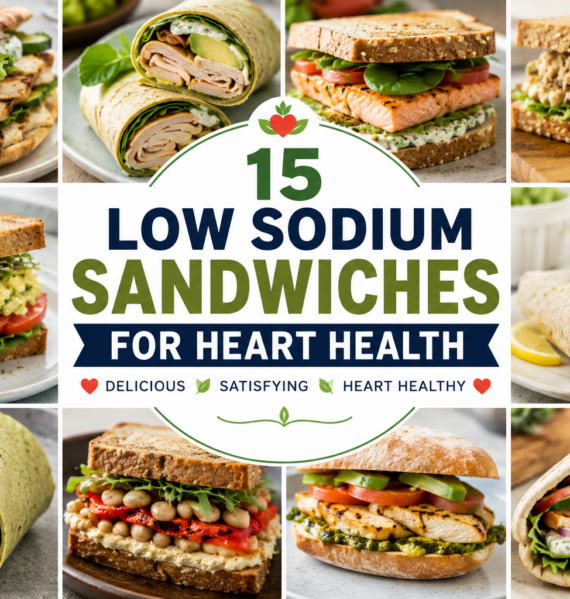
Collection of low sodium sandwiches and wraps including grilled chicken pita, turkey avocado wrap, salmon sandwich, chickpea sandwich, and heart-healthy lunch recipes.

15 Low Sodium Sandwiches for Heart Health

Looking for Low Sodium Sandwiches That Actually Taste Good?

Low sodium sandwiches can be difficult to find. Most sandwiches are sodium bombs loaded with deli meats, processed cheese, salty condiments, and restaurant breads that can contain hundreds or even thousands of milligrams of sodium.

Between deli meats, processed cheese, salty condiments, and restaurant breads, a single sandwich can easily contain more sodium than an entire healthy meal.

The good news is that low sodium sandwiches don’t have to be boring.

By focusing on fresh proteins, vegetables, herbs, healthy fats, and homemade spreads, you can enjoy satisfying sandwiches that support heart health, healthy blood pressure, and healthy aging.

Here are 15 low sodium sandwiches that actually deliver on flavor.


Why Many Low Sodium Sandwiches Taste Better Than Store-Bought Options

Many traditional sandwiches get their sodium from:

  • Deli meats
  • Processed cheeses
  • Pickles
  • Bottled sauces
  • Restaurant breads
  • Fast-food sandwich fillings

Making sandwiches at home gives you control over sodium while allowing you to build meals packed with protein, fiber, and healthy fats.


1. Grilled Chicken & Zucchini Pita with Herbed Yogurt Sauce

Fresh grilled chicken paired with zucchini and creamy yogurt sauce creates a satisfying lunch without excessive sodium.

Recipe Shop Pairing: Grilled Chicken & Zucchini Pita with Herbed Yogurt Sauce

2. Turkey Avocado Lettuce Wrap

Fresh roasted turkey, avocado, lettuce, and tomato provide heart-healthy fats and protein.

Why it works:

  • Low sodium
  • High protein
  • Easy meal prep

3. Mediterranean Chicken Pita

Filled with:

  • Chicken breast
  • Cucumbers
  • Tomatoes
  • Yogurt sauce
  • Fresh herbs

4. Avocado Egg Salad Wrap

Creamy avocado replaces much of the mayonnaise while adding healthy fats.

5. Chicken Salad Lettuce Boats

A refreshing alternative to traditional sandwiches.

Made with:

  • Chicken breast
  • Greek yogurt
  • Celery
  • Herbs

6. Tuna & Avocado Wrap

Combines protein-rich tuna with creamy avocado and crisp vegetables.

7. Grilled Salmon Sandwich

Omega-3 rich salmon paired with fresh greens creates a heart-healthy lunch.

8. Turkey Apple Crunch Wrap

Fresh turkey paired with apples and leafy greens creates a sweet and savory combination.

9. White Bean & Roasted Vegetable Flatbread

Plant-based and loaded with fiber.

Recipe Shop Pairing: Flatbread Pizza with Roasted Veggies & White Bean Spread

10. Chicken & Hummus Wrap

Lean protein combined with creamy hummus and crunchy vegetables.

11. Roasted Vegetable Pita

Packed with:

  • Bell peppers
  • Zucchini
  • Mushrooms
  • White bean spread

12. BBQ Spiced Salmon Wrap

A creative use of leftover salmon for meal prep lunches.

Recipe Shop Pairing: BBQ Spiced Salmon with Mashed Sweet Potatoes & Kale Slaw

13. Chickpea Salad Sandwich

A vegetarian alternative that delivers protein and fiber.

14. Turkey & Spinach Pita

Simple, satisfying, and perfect for work lunches.

15. Heart Healthy Chicken Wrap

A combination of:

  • Chicken breast
  • Avocado
  • Spinach
  • Tomatoes
  • Greek yogurt dressing

One of the easiest low sodium sandwiches for weekly meal prep.


What Makes Low Sodium Sandwiches Heart Healthy?

A heart-healthy sandwich focuses on:

  • Lean proteins
  • Fresh vegetables
  • Healthy fats
  • Whole grain or lower sodium breads
  • Homemade sauces and spreads

Limiting processed meats and packaged ingredients can significantly reduce sodium intake.


Benefits of Low Sodium Sandwiches for Heart Health

Reducing sodium intake may help:

  • Support healthy blood pressure
  • Promote cardiovascular health
  • Reduce fluid retention
  • Support circulation
  • Encourage healthy aging

According to the American Heart Association, most Americans consume far more sodium than recommended each day.


Frequently Asked Questions

What is the lowest sodium sandwich meat?

Freshly cooked chicken, turkey, and roast beef are generally lower in sodium than processed deli meats.

Can sandwiches be heart healthy?

Yes. Sandwiches made with lean proteins, vegetables, healthy fats, and lower sodium ingredients can support heart health.

What bread is best for a low sodium sandwich?

Look for breads containing less than 140 mg sodium per slice whenever possible.

Are wraps lower in sodium than bread?

Not always. Some wraps contain more sodium than bread, so it’s important to compare labels.


Related Low Sodium Resources

Looking for more heart-healthy lunch ideas?

Explore:


Low Sodium Sandwich Meal Prep Tips

Making low sodium sandwiches ahead of time can save time and help you avoid high-sodium convenience foods. Cook proteins such as chicken breast, turkey breast, or salmon in bulk and store them in individual portions. Prepare vegetables and homemade spreads in advance so lunches can be assembled in minutes throughout the week.

Meal prep-friendly options include:


The Bottom Line

Low sodium sandwiches don’t have to sacrifice flavor.

By choosing fresh ingredients, lean proteins, vegetables, and homemade spreads, you can build lunches that support heart health while still tasting great.

Whether you prefer wraps, pitas, flatbreads, or traditional sandwiches, there are plenty of delicious options that fit a low sodium lifestyle.


low-sodium lunch

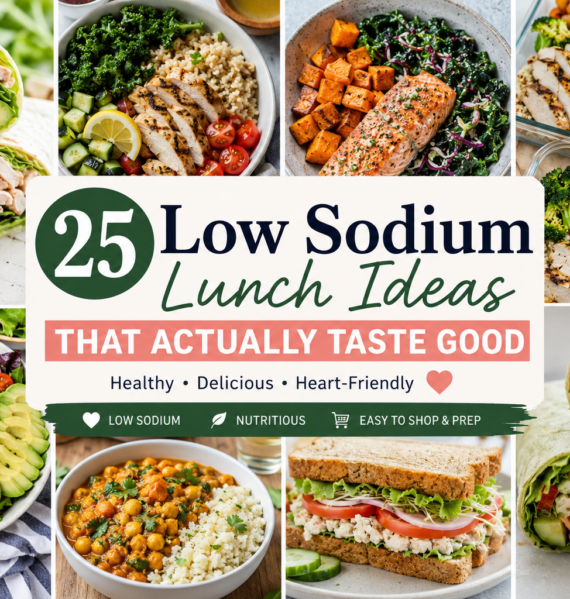
Quick Low Sodium Lunch Ideas That Are Perfect for Busy Days!

Simple, balanced meals designed for energy, heart health, and steady blood sugar

Quick low sodium lunch ideas that are filling, practical and actually taste good can be hard to find.  Most “healthy” lunch ideas are either overloaded with hidden sodium or leave you hungry an hour later.

This guide gives you practical, real-life low sodium lunch ideas designed to support energy, heart health, and blood sugar balance—without sacrificing flavor.


Quick Low Sodium Lunch Ideas (Start Here)

Best Low Sodium Lunches for Blood Sugar Balance

Low sodium lunches work best when they combine protein, fiber, healthy fats, and balanced carbohydrates. This helps reduce blood sugar spikes, prevent afternoon crashes, and keep meals satisfying without relying on salty packaged foods.

If you just need ideas fast, start with these:


Why Low Sodium + Balanced Carbs Works

At Recipe Shop, meals are built using the 45/500 Framework™:

  • ~45g carbohydrates for steady energy
  • ~500mg sodium to support heart and brain health

This balance helps:

  • prevent energy crashes
  • stabilize mood and focus
  • support long-term heart health

According to the American Heart Association, most adults should aim to limit sodium intake to 1,500–2,300 mg per day.


How to Build Low Sodium Lunch Ideas That Keep You Full

Protein: The Foundation

Choose lean, unprocessed proteins:

  • grilled chicken
  • turkey
  • eggs
  • fish
  • tofu

Avoid processed deli meats, which are often high in sodium.


Vegetables: Fiber + Volume

Focus on non-starchy vegetables:

  • leafy greens
  • cucumbers
  • zucchini
  • bell peppers
  • cauliflower

These add fiber, nutrients, and help keep you full.


Healthy Fats: Stay Satisfied

Add:

  • avocado
  • olive oil
  • nuts and seeds

These support brain health and prevent hunger between meals.


Quick Low Sodium Lunch Ideas You Can Prep Fast

Salad-Based Meals

  • Grilled chicken salad with cucumbers, tomatoes, and lemon dressing
  • Spinach and avocado salad with grilled shrimp

Wraps & Roll-Ups

  • Turkey and avocado lettuce wraps
  • Grilled chicken and veggie wraps with low-sodium hummus

Protein Bowls

  • Cauliflower rice + grilled chicken + roasted vegetables
  • Quinoa bowl with vegetables and lemon-tahini dressing

Soups & Prep Meals

  • Homemade chicken and vegetable soup (low sodium)
  • Batch-prepped protein + veggie containers

Snack-Style Lunches

  • Hard-boiled eggs, raw vegetables, almonds
  • Cheese, cucumber slices, and hummus

Try These Low-Sodium Recipes

Start with these balanced meals:

These low sodium lunch ideas are designed to be simple, practical, and easy to repeat during a busy week.

According to the American Heart Association, most adults should aim to limit sodium intake to 1,500–2,300 mg per day


How to Add Flavor Without Salt

Low sodium doesn’t mean low flavor. Use:

  • garlic and onion powder
  • smoked paprika
  • fresh herbs
  • lemon juice and vinegar
  • spices and seasoning blends

Common Low-Sodium Pitfalls

Hidden Sodium

Watch for:

  • sauces and dressings
  • canned foods
  • processed meats

Lack of Variety

Rotate ingredients weekly to avoid burnout and keep meals interesting.


Not Enough Protein or Fat

This leads to cravings and energy crashes. Balance your meals.


Low Sodium Lunches for Work and On-the-Go

The easiest low sodium lunches for work are meals you can pack ahead, eat cold or reheat quickly, and build around simple ingredients. Think protein bowls, lettuce wraps, snack boxes, low sodium soups, and balanced leftovers from dinner.


Low-Sodium Lunch FAQ

What is considered low sodium for lunch?
Aim for about 400–600mg per meal for a balanced approach.

Can low sodium meals still taste good?
Yes—flavor comes from herbs, acid, and cooking techniques, not just salt.

What’s the easiest low sodium lunch?
A protein + veggie bowl with olive oil and seasoning is simple and effective.


Final Takeaway

Low sodium eating doesn’t have to be complicated or bland. With the right structure, you can build meals that are:

  • satisfying
  • energizing
  • supportive of long-term health

Every lunch is a chance to fuel your body—and your future.

Explore more recipes and structured meal plans

These quick low sodium lunch ideas are designed to make healthy eating easier during busy workdays and hectic schedules.

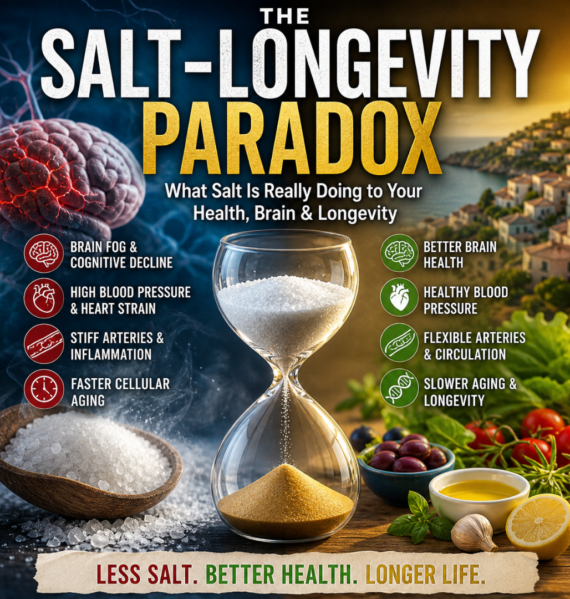
The Salt-Longevity Paradox: Myths Busted by Science

Why Everything You Think You Know About Salt and Longevity Might Be Killing You

By Lisa Davies, Certified Nutritionist & Founder of Recipe Shop


The Modern Longevity Lie

Salt and longevity are closely linked, yet widely misunderstood. While many people believe sodium only affects blood pressure, research shows it plays a major role in brain aging, inflammation, and long-term disease risk.

We live in the age of information, wellness influencers, and biohacking—but we’re still getting salt dead wrong. At the very same time that longevity research is booming, a quiet epidemic is shortening lives, increasing disability, and accelerating aging in plain sight.

And it’s not sugar.
It’s not alcohol.
It’s not fat.

It’s sodium—hiding in “healthy” food, gaslighting your body, and aging you at the cellular level.

The idea that salt is only dangerous for people with high blood pressure is an outdated, dangerous myth. It’s time to dismantle the “Salt–Longevity Paradox” once and for all.


Start Here: Reduce Sodium Without Losing Flavor

If you want to apply this in real life, start with:


Part I: The Hidden Sodium Crisis No One Talks About

Most Americans consume 3–4 times the recommended daily sodium limit—often before dinner.

Yet, 75% of sodium doesn’t come from the salt shaker. It comes from “healthy-looking” processed foods:

  • Turkey breast labeled “natural”
  • Protein bars
  • Veggie burgers
  • Multigrain wraps
  • “Low-fat” soups

Even organic, clean-eating meal kits can pack over 3,000 mg of sodium—daily. That’s enough to:
✅ Spike your blood pressure overnight
✅ Dehydrate your brain cells
✅ Weaken your arterial lining
✅ Impair insulin sensitivity
✅ Disrupt sleep hormones
✅ Break down collagen

The truth is: sodium doesn’t just affect your heart—it affects your entire lifespan.

If you’re trying to reduce sodium without sacrificing flavor, start with these low sodium lunch ideas →


Part II: How Salt Affects Longevity and Aging

Let’s break it down by system.

1. 🧠 Salt Shrinks the Brain

A landmark study in Nature Neuroscience found that excess dietary sodium triggers a cascade of immune responses in the brain, reducing blood flow and causing cognitive deficits—without affecting blood pressure at all.

Translation? Even if your BP looks normal, your brain may already be aging faster if your sodium is too high.

Another 2020 study from the American Heart Association revealed that high sodium diets reduce the size of the hippocampus—the part of the brain responsible for memory. This may be one reason behind the skyrocketing rates of early-onset dementia.

🧠 Salt-induced brain fog is real—and it’s reversible.


2. ❤️ Salt Ages Your Arteries

High sodium stiffens blood vessels. Over time, this causes the walls of your arteries to lose elasticity, increasing your risk of stroke, vascular dementia, and kidney disease—even if you “feel fine.”

One study in The Journal of Hypertension tracked nearly 4,000 healthy adults. Those who consumed the most sodium had twice the arterial stiffness, a key marker of biological aging.

The kicker? These changes can start in your 30s.


3. 🧬 Salt Accelerates Cellular Aging

Excess sodium intake triggers oxidative stress and low-grade inflammation—a combo that damages mitochondria, your cells’ energy producers.

It also contributes to telomere shortening, a known biomarker of accelerated aging and disease risk. The shorter your telomeres, the higher your risk of:

  • Alzheimer’s
  • Cardiovascular disease
  • Type 2 diabetes
  • Certain cancers

In a massive study published in The European Journal of Nutrition, high sodium intake correlated with shorter telomeres, especially when paired with low potassium—a perfect storm in the modern diet.


Part III: Blue Zones and the Salt–Longevity Connection

Let’s talk about the real anti-aging diets of the world.

The five “Blue Zones”—areas with the highest percentages of centenarians—include Okinawa, Ikaria, Sardinia, Nicoya, and Loma Linda. Across all of them:

  • Meals are homemade
  • Sodium is minimal and mostly naturally occurring
  • Salt is used as a finishing flavor, not a food preservative
  • Processed food is virtually absent

Average sodium intake in these zones?
1,200–1,800 mg/day.
That’s less than HALF the U.S. average.

🔥 In the Blue Zones, salt is a seasoning. In America, it’s an addiction.


Want a Structured Approach?

If you want to apply these principles consistently, follow the Heart Healthy Meal Plan →

This plan combines low sodium, balanced carbs, and anti-inflammatory ingredients into meals designed to support circulation, brain health, and long-term aging.


Part IV: 5 Myths About Salt That Are Aging You Faster

Let’s bust them:

❌ Myth #1: “I don’t salt my food, so I’m fine.”

✅ Reality: Up to 90% of sodium comes from packaged foods, sauces, dressings, and restaurant meals.

❌ Myth #2: “You need more salt if you’re low-carb.”

✅ Reality: While low-carb diets affect sodium regulation, most people overcorrect and overload sodium without balancing potassium or magnesium.

❌ Myth #3: “Low sodium is dangerous for athletes.”

✅ Reality: True sodium deficiency is rare and usually due to excessive fluid intake, not low dietary salt.

❌ Myth #4: “Sea salt and pink salt are healthier.”

✅ Reality: These may contain trace minerals, but they’re still sodium chloride. The body treats them the same.

❌ Myth #5: “Low sodium = bland food.”

✅ Reality: When your taste buds recalibrate (which takes ~3 weeks), herbs, spices, citrus, garlic, and umami-rich ingredients become your new flavor toolkit.


Part V: What Happens When You Cut Salt (The First 7 Days)

The change is visceral:

  • 💧 You shed 3–7 pounds of water weight
  • 🧠 Brain fog clears like lifting a wet towel
  • ⛓️ Cravings ease — taste buds reset
  • ❤️ BP starts dropping within 48 hours
  • 💤 Sleep becomes deeper, more restful
  • 🪞 Facial puffiness and under-eye bags fade
  • 🧬 Energy returns at the mitochondrial level

And yes, even your skin looks better. (Collagen breakdown slows, puffiness reduces, and cell hydration improves.)


Part VI: The Salt–Longevity Equation You Actually Need

Here’s the new formula:

  • Sodium: Keep under 1,500 mg/day (most days)
  • Potassium: Increase to 3,500–4,700 mg/day (leafy greens, beans, squash, avocado, sweet potato)
  • Hydration: At least ½ body weight in oz water
  • Magnesium: 300–400 mg/day from food or supplement
  • Whole Food Meals: Made at home or from low-sodium meal plans like those on Recipe Shop

This nutrient triad (low sodium, high potassium, balanced hydration) is your anti-aging shield.


Final Word: You Don’t Need to Fear Salt—You Need to Respect It

Salt isn’t evil.
But the way we consume it is.

If you care about your health span (not just your lifespan), sodium has to move from the sidelines to the front of the conversation.

No amount of collagen powder, matcha, or morning meditation will undo a 3,400 mg/day sodium habit. Not when it’s unraveling your brain, arteries, skin, metabolism, and mitochondria from the inside out.


📦 Download the 7-Day Low-Sodium Reset Plan

Want to feel the difference in 7 days or less?
Get the exact plan we give our clients (and our families):

[Download the Free 7-Day Reset]
→ Includes 14 low-sodium recipes (500mg sodium max per meal)
→ Grocery list + delivery links
→ Quick meals: 30 minutes or less
→ Proven results in energy, clarity, sleep & cravings


🔁 Share This Paper

If you care about aging well, share this with someone you care about.

Tag: #SaltMyths #LongevityReset #RecipeShop

Dark moody image of a sleepless person under eerie blue light with 3:12AM glowing on a digital clock

The 3AM Curse

You jolt awake — again — at 3:12 AM. No sound. No nightmare. Just a wired brain in a restless body. You’re wide awake… but why?

Most people blame stress, hormones, or maybe scrolling too late. But what if the real saboteur is far more silent — and it’s been lurking on your plate?


🧂 The Silent Saboteur: Salt’s Impact on Sleep Hormones

This isn’t another tired warning about salt and blood pressure. This is about how sodium intake directly alters your sleep hormones, disrupts your neurochemical balance, and leads to what many experience as the dreaded 3AM wakeup — a phenomenon far more biological than behavioral.

🧠 Hormonal Hijacking: The Science

Let’s begin with the endocrine system, your body’s hormonal command center. A proper circadian rhythm requires a coordinated dance between melatonin (the sleep hormone) and cortisol (the alertness hormone).

  • In healthy individuals, melatonin levels rise in the evening, signaling your body to wind down.
  • Cortisol levels, ideally, dip to their lowest point during deep sleep, preparing you for overnight repair and memory consolidation.

But when you consume a high-sodium meal at dinner — especially common in processed or restaurant foods — you set off a series of biochemical disruptions:

  1. Transient Hypertension: Sodium pulls water into your bloodstream, elevating blood pressure. This activates your sympathetic nervous system (fight-or-flight), triggering cortisol and adrenaline spikes.
  2. Dehydration & Electrolyte Imbalance: Elevated sodium decreases intracellular hydration and competes with other minerals like magnesium and potassium, which are critical for calming the nervous system and relaxing muscles.
  3. Suppressed Melatonin: According to research published in Chronobiology International, sodium can interfere with pineal gland function, which suppresses melatonin release.
  4. Cortisol Overexpression: A study in The Journal of Clinical Endocrinology & Metabolism found a strong correlation between high sodium intake and nighttime cortisol elevation, a direct saboteur of deep, restorative sleep.

⏰ Why 3AM? A Biological Explanation

Waking up between 2:30–4:00 AM isn’t random. This is the window when your body temperature is lowest, liver detoxification peaks, and REM-to-non-REM cycling transitions are most fragile. It’s also when your body is extremely sensitive to cortisol surges.

Symptoms include:

  • Sudden awakenings with a racing heart
  • Unexplained thirst or dry mouth
  • Restless legs or twitching
  • Feeling “wired but tired”

These symptoms aren’t just insomnia — they’re biochemical alarm bells, warning you that your nervous system is overstimulated due to dietary triggers.


🔁 The Salt-Sleep Disruption Loop

The cycle is self-perpetuating:

  1. Salty dinner (think takeout, frozen meals, canned soup)
  2. Poor mineral absorption (low magnesium/potassium)
  3. Interrupted sleep
  4. Fatigue and sugar cravings the next day
  5. More sodium-heavy meals for quick energy
  6. Repeat

This isn’t a willpower issue — it’s a loop dictated by neuroendocrine responses to diet.


🥗 Break the Cycle: How to Reclaim Restorative Sleep

1. Dinner Sodium Check

  • Keep meals under 500mg sodium per serving.
  • Avoid deli meats, jarred sauces, and frozen entrées unless labeled “low sodium.”

2. Mineral Support

  • Boost potassium: leafy greens, bananas, beans, sweet potatoes
  • Add magnesium: seeds, legumes, dark chocolate, and possibly magnesium glycinate supplements

3. Rewire with Recipes That Heal

  • Use recipes from Recipe Shop’s Brain & Mood Boost Plan or Cravings Reset Plan, all crafted to:
    • Limit sodium
    • Stabilize blood sugar
    • Provide nutrient-dense, mineral-rich ingredients

🔬 What the Experts Say

A 2022 meta-analysis in Sleep Health found that individuals with higher sodium intake were 37% more likely to experience nighttime awakenings, independent of age or BMI.

Another study in Nutrients emphasized that sodium-potassium imbalance was a primary driver in sleep fragmentation and reduced sleep efficiency — two hallmarks of hormonal dysregulation.


🌙 Final Thoughts: Salt, Sleep, and the 3AM Curse

If you’re waking up in the middle of the night, your body is sending a message. And it might not be about stress or screens — it might be the silent influence of sodium.

By rebuilding your plate — with low-sodium, mineral-balanced meals — you can restore your body’s natural rhythms, reclaim deep sleep, and finally break the 3AM curse.

Try the Brain & Mood Boost Plan or Cravings Reset Plan from Recipe Shop — meals designed by a certified nutritionist, optimized for your nervous system, and always capped at ~45g carbs and ~500mg sodium per serving.

You don’t need more willpower — you need the right recipe.

Let food do what sleep aids can’t. Let’s eat our way back to better sleep.

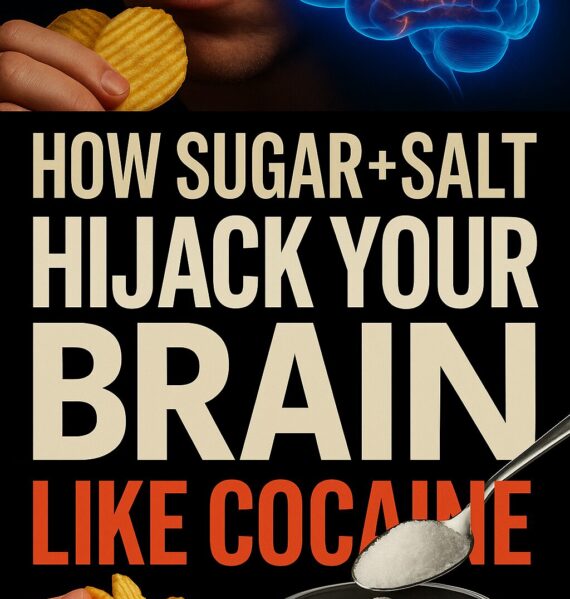
A bold digital graphic illustrating sugar and salt triggering addictive brain activity, highlighting the similarity to cocaine addiction pathways.

How Sugar + Salt Hijack Your Brain Like Cocaine

And Why the Food Industry Doesn’t Want You to Know


Introduction: The Perfect Chemical Storm — In Your Pantry

You’re not weak.
You’re not lazy.
You’re being hijacked — by your own brain.

Every time you reach for that bag of chips or that cookie, there’s a biochemical war happening behind the scenes — and the food industry is winning.

👉 The combination of sugar + salt is one of the most powerful addictive food triggers ever engineered — and it lights up your brain’s reward circuits in the same way as hard drugs like cocaine.

In fact, modern neuroscience now shows that ultra-processed foods create patterns of addiction and compulsion that mirror drug dependence — complete with tolerance, withdrawal, and binging cycles.

Here’s how it happens — and how to break free.


Section 1: The Neuroscience of Craving

Your brain has a reward center — the mesolimbic dopamine system.
Its job? Reinforce behaviors that help you survive:
👉 Eating
👉 Drinking
👉 Sex
👉 Social connection

When you eat something hyper-palatable — meaning a food engineered to taste unnaturally good — this system floods with dopamine, your “feel-good” chemical.

Here’s the catch:

  • Natural whole foods trigger a moderate, balanced dopamine release.
  • Ultra-processed foods — especially the sugar + salt combo — create a superstimulus → unnatural dopamine surges → hijack the system.

The “Bliss Point”: Food Engineering’s Dark Secret

Food scientists literally design processed foods to hit your bliss point — the exact ratio of salt + sugar + fat that triggers maximum pleasure.

  • Salt enhances flavor and masks bitterness.
  • Sugar hits sweet receptors and drives dopamine release.
  • Combined, they create a feedback loop of compulsive eating.

A 2013 study published in The American Journal of Clinical Nutrition found that ultra-processed foods with sugar + salt combinations activated brain areas linked to drug addiction, including:

  • Nucleus accumbens (reward/motivation)
  • Amygdala (emotion)
  • Prefrontal cortex (decision-making)

👉 In other words:
You aren’t choosing the food anymore — the food is choosing you.


Section 2: Why Sugar + Salt Together Are More Addictive Than Either Alone

Salt alone: stimulates thirst, enhances flavor.
Sugar alone: triggers sweet receptors, dopamine surge.

Togethersynergistic addiction loop:

  1. Salt stimulates dopamine release and increases palatability.
  2. Sugar triggers hedonic eating — eating for pleasure, not hunger.
  3. The combined taste keeps you eating past satiety (you stop noticing fullness).
  4. Repeated exposure → dopamine receptor downregulation → you need MORE to get the same pleasure.

A vicious cycle:

  • More cravings.
  • More binging.
  • More tolerance.
  • More damage to your brain’s ability to regulate appetite.

Sound familiar?
This is exactly how cocaine and other addictive drugs work:

  • Trigger dopamine surges.
  • Desensitize dopamine receptors.
  • Drive compulsive seeking of the substance.

Section 3: The Evidence Is Mounting

🔍 Study 1: Neuroscience & Biobehavioral Reviews (2018)
Found that sugar can produce bingeing, craving, withdrawal, and cross-sensitization with drugs of abuse in animal models.

🔍 Study 2: Frontiers in Psychiatry (2019)
Ultra-processed foods high in refined carbs + sodium + fat activate the same neural pathways as substance use disorders — and show addictive behaviors in humans.

🔍 Study 3: Yale University (2021)
Functional MRI studies show that ultra-processed food cues light up brain areas linked to drug craving and compulsive use, especially when salt + sugar are combined.

👉 Summary: Your brain does NOT distinguish between the craving for a bag of chips and the craving for cocaine — on a neural level, it looks frighteningly similar.


Section 4: The Real Cost — How This Affects Your Body and Mind

Brain:

  • Impaired dopamine signaling → less motivation, more fatigue.
  • Increased risk of depression and anxiety.
  • Reduced executive function → harder to control behavior.

Body:

  • Increased insulin resistance.
  • Chronic inflammation → linked to heart disease, cancer, neurodegeneration.
  • Accelerated aging of the brain → reduced neuroplasticity.

Behavior:

  • Compulsive eating even when full.
  • Loss of control over food choices.
  • Tolerance → need higher doses to feel satisfied.

Section 5: The Food Industry’s Playbook

👉 This isn’t an accident.
👉 This is engineered addiction.

  • Cereal companies add salt to “balance” sugar and enhance cravings.
  • Snack foods are optimized for the sugar-salt-fat triad.
  • Fast food chains use sodium-heavy sauces combined with sugar-heavy drinks → maximum dopamine hits.

Bottom line: They know exactly what they are doing — and they’re targeting your biology.


Section 6: How to Break Free — Practical Steps

1️⃣ Awareness

  • Read labels. Anything with more than 200mg sodium + added sugar → potential dopamine bomb.

2️⃣ Reset your palate

  • Cut out ultra-processed foods for 10–14 days → your dopamine system begins to normalize.

3️⃣ Use natural flavor hacks

  • Acid (lemon, vinegar)
  • Herbs (rosemary, basil, mint)
  • Umami (miso, mushrooms, nutritional yeast)
  • Spices (cinnamon, turmeric, ginger)

4️⃣ Support your dopamine naturally

  • Exercise.
  • Sleep.
  • Whole-food nutrition.
  • Social connection.

👉 These behaviors boost dopamine without addiction.


Conclusion: You’re Not Broken — The System Is Rigged

If you’ve struggled with food cravings, binging, or “weak willpower” — stop blaming yourself.

The sugar + salt combo in processed foods is a deliberate hijack of your brain’s reward system — designed to make you eat more, buy more, and crave more.

But you CAN break the cycle — and once you do, the change is profound:

  • More energy.
  • Better mood.
  • Better focus.
  • Healthier body.
  • A brain that works for you, not against you.

CTA:
👉 If you want to make this shift easy — without giving up flavor — that’s what we built Recipe Shop for.
Low-sodium, low-sugar, high-flavor recipes that actually support your brain, your body, and your future.

Start your free trial → [https://www.recipeshop.net]

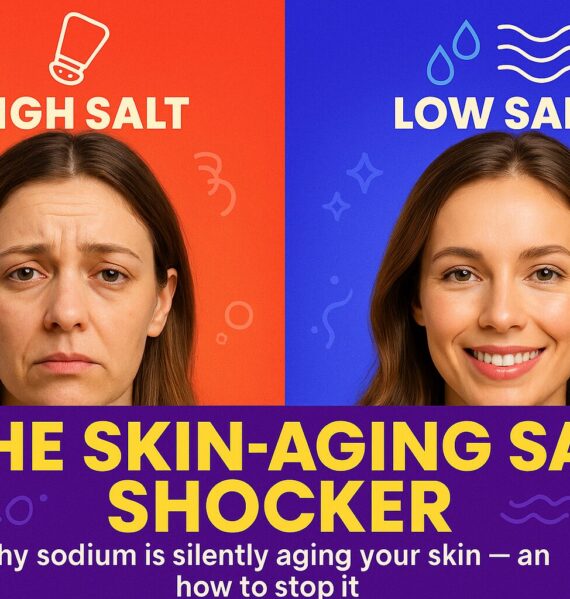
Split-screen image of a woman with dull skin on high-salt diet versus glowing skin on low-salt diet, illustrating the impact of sodium on skin health.

The Skin Aging Salt Shocker: How Sodium Is Silently Sabotaging Your Glow


The Anti-Glow You’re Eating Without Realizing It

You can buy every serum on the shelf.
You can stack collagen powders and sip fancy green drinks.
But if your skin is dull, puffy, and aging faster than it should be—look no further than the salt shaker on your table and the hidden sodium in your kitchen.

Excess sodium is one of the most powerful, overlooked drivers of visible skin aging.
And the beauty industry won’t tell you this—because it would cut into their product sales. The skincare brands would rather sell you a $90 bottle of anti-puff cream than tell you to cut back on sodium first.

Here’s what the science says.
Here’s why your “clean” diet might still be wrecking your glow.
And here’s what to do starting this week.


Section 1: The Silent Assault—How Salt Ages Your Skin From the Inside Out

Most people associate sodium with bloating or blood pressure.
Few realize that it is also directly linked to skin dehydration, collagen breakdown, and oxidative stress — the real culprits behind wrinkles and dull tone.

1️⃣ Salt dehydrates your skin—deeply

Sodium attracts water into your bloodstream and away from your skin tissues.
When you eat too much sodium, your body responds by retaining water in the wrong places → in blood vessels and extracellular space → leaving your skin thirsty and depleted.

“Increased sodium intake leads to measurable skin dehydration within 24 hours.”
Journal of the European Academy of Dermatology and Venereology, 2020

What it looks like:
✅ Loss of skin elasticity
✅ Dull tone / lack of glow
✅ Fine lines appear more prominent
✅ Puffiness around eyes and cheeks

2️⃣ Salt damages collagen and elastin

Sodium also fuels inflammation and oxidative stress—two forces that break down collagen and elastin, the scaffolding that keeps skin youthful and firm.

“A high-sodium diet is associated with higher systemic markers of inflammation (CRP, TNF-alpha) and oxidative stress.”
American Journal of Clinical Nutrition, 2017

Result:
Collagen degrades → skin sags faster → deeper wrinkles emerge → skin appears older.

3️⃣ Salt worsens glycation

One of the hidden links: salt worsens the glycation process—where sugars bond to proteins and make them stiff and dysfunctional (hello, wrinkles).

“Sodium accelerates AGE formation and modifies skin protein cross-links.”
Archives of Dermatological Research, 2016


Section 2: The Beauty Industry’s Blind Spot (And How They Profit From It)

Here’s the dirty little secret:
The multi-billion dollar skincare industry spends millions marketing topical solutions…while saying nothing about the biggest dietary driver of aging they can’t control: sodium.

  • No cream can out-hydrate a high-salt diet.
  • No serum can repair collagen that salt is breaking down daily.

Why they ignore it:
? If consumers knew how dramatically sodium impacts skin aging, they would cut salt first—before buying $150 products.
? Skincare brands need you to chase external solutions, not address internal root causes.


Section 3: The Shocking Sodium Reality—Even in “Healthy” Diets

Here’s the part that shocks most people:
You do NOT have to eat fast food to overdose on sodium.

Common “healthy” foods that secretly age your skin via sodium:

FoodTypical Sodium
Packaged soups800–1,200 mg per serving
Salad kits700–1,500 mg per kit
Store rotisserie chicken600–1,000 mg per 3 oz
Deli turkey500–700 mg per 2 oz
“Healthy” frozen meals800–1,200 mg per tray
Many restaurant meals1,500–2,000 mg per plate

Daily target to protect skin:
? Aim for ~1,500–1,800 mg total per day (WHO and AHA recommend < 2,300 mg max).
? At RecipeShop.net, we target ~500 mg per meal or less → skin-friendly, heart-friendly, glow-friendly.


Section 4: How Cutting Sodium Transforms Skin—Fast

Here’s the payoff:
When you cut sodium strategically, skin responds rapidly:

Within 3–5 days:

  • Reduced puffiness
  • Brighter eyes
  • Less facial bloating

Within 7–14 days:

  • Smoother skin tone
  • Improved hydration (skin retains more water naturally)
  • Subtle lifting effect → improved skin tightness

Over time (4–8 weeks):

  • Fewer new wrinkles forming
  • Better elasticity
  • More natural glow → no “tired face” look
  • Better blood flow → improved skin repair

Clinical proof:

“In trials reducing sodium from 3,500mg to <2,000mg daily, participants showed measurable skin hydration improvement and reduction in periorbital puffiness within 10 days.”
Dermatology & Therapy Journal, 2021


Section 5: What to Do Now—5 Steps to Reverse Salt-Driven Skin Aging

1️⃣ Cut packaged foods first
→ These are the worst sodium offenders.

2️⃣ Rebuild flavor with herbs, acids, umami
→ Lemon, vinegar, garlic, herbs → glow-friendly flavor.

3️⃣ Hydrate smart
→ Drink water + potassium-rich foods (avocado ?, spinach, sweet potato) → offsets sodium’s effects.

4️⃣ Choose true low-sodium recipes
→ Follow ~500 mg per meal rule → skin-safe threshold.

5️⃣ Track your glow
→ Take a “before” and “after” selfie when you start.
→ You’ll see reduced puffiness, tighter skin, more glow—often in under 10 days.


Conclusion: The Real Beauty Detox

Salt is the anti-beauty ingredient the industry doesn’t want to talk about.
Cutting sodium is the most underrated skin-care decision you can make—cheaper than creams, more effective than collagen powders, and instantly beneficial for your whole body.

? You can start today:

  • Skip the salt traps.
  • Cook with flavor, not sodium.
  • Watch your skin transform.

Try it now:

? Join Recipe Shop — full access to low-sodium, skin-loving, glow-promoting recipes.

✨ Start with our Anti-Aging Meal Plan → free for 14 days → no card required.


Sources:

  • Journal of the European Academy of Dermatology and Venereology, 2020
  • American Journal of Clinical Nutrition, 2017
  • Archives of Dermatological Research, 2016
  • Dermatology & Therapy Journal, 2021
  • WHO & AHA dietary guidelines
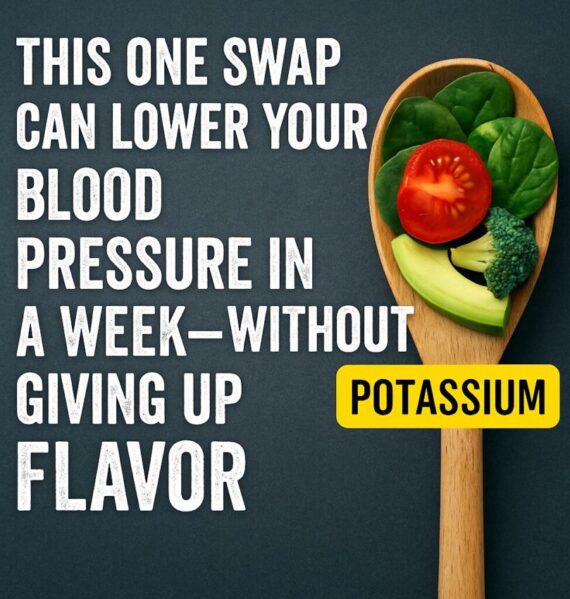
Digital health graphic comparing sodium-heavy processed foods to potassium-rich whole food swaps that support healthy blood pressure.

This One Swap Can Lower Your Blood Pressure in a Week—Without Giving Up Flavor


Introduction: The Sodium Trap We Didn’t See Coming

High blood pressure isn’t just a health concern for the elderly—it’s creeping up on younger generations, fueled by a seemingly innocent culprit: sodium. While salt enhances flavor and preserves food, it’s also wreaking havoc on our cardiovascular systems, often silently. The average American consumes more than 3,400mg of sodium daily, far beyond the recommended 2,300mg max. The result? A nation battling chronic hypertension, stroke risk, and organ strain—and most don’t even realize why.

But here’s the real kicker: you can start to lower blood pressure and reverse the damage in just one week. The solution isn’t deprivation. It’s knowledge. It’s potassium. It’s flavor-forward swaps chefs and nutritionists use to balance and heal. Let’s unpack the science, the stakes, and the simple fix you can start today.


Section 1: The Sodium-Hypertension Connection—Shocking but True

Sodium isn’t evil. But too much sodium, in the context of processed food and modern diets, is deadly.

How It Works:

Sodium attracts water. When there’s excess sodium in your bloodstream, your body retains more fluid, which increases the volume of blood in your vessels. This heightened volume forces your heart to work harder to pump blood, raising blood pressure.

“For every 1,000mg increase in sodium per day, systolic blood pressure rises by 2.11 mm Hg.” — BMJ Meta-Analysis, 2013

Fast Facts:

  • 90% of Americans exceed the recommended sodium limit.
  • Hypertension is the leading cause of stroke and second leading cause of kidney failure.
  • One week of sodium reduction can reduce blood pressure significantly.

Sources:

  • CDC, 2023. Sodium and Your Health
  • He, F. J., MacGregor, G. A., BMJ, 2013

Section 2: Why It Happens—And Who’s Most at Risk

The Food Industry Playbook:

Manufacturers use sodium to mask blandness in cheap ingredients, extend shelf life, and make ultra-processed food addictive.

Sodium is often hidden in:

  • “Healthy” soups and sauces (600–1000mg per serving)
  • Restaurant meals (1,500–2,000mg in one dish)
  • Meat alternatives and frozen meals

Disproportionate Impact:

  • People over 50
  • African Americans (more salt-sensitive genetics)
  • Individuals with kidney issues, insulin resistance, or heart disease

Bottom line: You’re not failing your diet. Your food environment is engineered to fail you.


Section 3: The One Swap—From Salt to Potassium

The Secret Hero: Potassium

Potassium counters the effects of sodium by helping blood vessels relax and excreting excess sodium through urine. It’s the anti-salt. Yet 98% of Americans fall short of the daily recommended 4,700mg.

“Increasing potassium while lowering sodium is the most effective dietary approach to lowering blood pressure.” — American Heart Association

Top Potassium-Rich Foods:

  • Sweet potatoes (448mg/half cup)
  • Avocados (708mg/fruit)
  • Spinach (839mg/cup, cooked)
  • Beans, lentils, squash, bananas, tomatoes

Pro Tip: When you increase potassium and reduce sodium together, the impact is fast and lasting.


Section 4: Seasonings That Mimic Salt—And Do More

Salt isn’t the only way to create flavor. Professional chefs know how to layer acidity, umami, and fresh herbs to deliver intensity without the hypertension.

Flavor Without Salt:

  • Citrus Juice & Zest: Adds brightness
  • Vinegars (balsamic, apple cider, rice): Adds tang and depth
  • Umami bombs: Nutritional yeast, mushrooms, tomatoes, miso (watch the sodium), roasted garlic
  • Spices: Cumin, smoked paprika, turmeric, coriander
  • Herbs: Fresh basil, thyme, rosemary, mint, cilantro

Use combinations: garlic + lemon + parsley, or vinegar + mustard + tarragon for rich, complex notes.


Section 5: Sample Meals That Lower Blood Pressure in Days

? Sweet Potato Buddha Bowl

  • Roasted sweet potato, quinoa, kale, black beans, tahini-lemon dressing
  • Sodium: 320mg | Potassium: ~1,200mg

? Citrus-Roasted Chicken with Spinach & Farro

  • Chicken thighs, orange zest, garlic, olive oil, wilted spinach, farro
  • Sodium: 390mg | High fiber, potassium, and magnesium

? Lentil & Vegetable Stir-Fry

  • Lentils, red cabbage, bok choy, mushrooms, sesame oil, tamari (low-sodium)
  • Sodium: 430mg | Anti-inflammatory + potassium-rich

? Avocado & White Bean Toast

  • Smashed avocado + mashed white beans + lime + chili flakes
  • Sodium: 210mg | Satiety + blood pressure-friendly fats

Conclusion: Flavor Doesn’t Require Salt. Health Doesn’t Require Sacrifice.

Lowering your blood pressure doesn’t mean giving up flavor—it means giving up manipulation. It means choosing foods that nourish your body instead of overwhelming it.

The swap is simple:

  • Reduce sodium
  • Boost potassium
  • Layer bold flavor with acids, spices, and herbs

Do it for one week. See how your body feels—your clarity, energy, and even your scale might surprise you.

Try Recipe Shop for Free Low-sodium, nutrient-rich meals that do the flavor work for you. No credit card required. Just results.

Low Sodium Meals

healthy cottage cheese pizza bowl with roasted garlic chicken and melted mozzarella

Roasted Garlic Cottage Cheese Pizza Bowl with Crisped Protein Crust

Healthy cottage cheese pizza bowl inspired by the viral pizza bowl trend. This high-protein dinner delivers about 60g protein with …
French toast skillet topped with cinnamon apples and vanilla yogurt custard

French Toast Skillet with Vanilla Yogurt Custard & Cinnamon Apples

A cozy French toast skillet with cinnamon apples and vanilla yogurt custard, packed with protein and balanced for blood sugar-friendly …
High Protein soft-scrambled eggs with turkey sausage and crispy potatoes on a plate

Creamy Soft-Scramble Eggs with Turkey Sausage & Crispy Potatoes

Creamy soft-scramble eggs with turkey sausage and crispy potatoes deliver high-protein comfort with balanced carbs and lower sodium for steady …
Low-sodium lemon-thyme salmon with garlic roasted potatoes and sautéed kale on a plate

Lemon-Thyme Salmon with Garlic Roasted Potatoes & Sautéed Kale

Lemon-Thyme Salmon with roasted potatoes and sautéed kale delivers heart-healthy omega-3s, balanced carbs, and vibrant low-sodium flavor …
Low sodium grilled chicken and zucchini pita wrap with fresh herbed yogurt sauce

Grilled Chicken & Zucchini Pita with Herbed Yogurt Sauce

Fresh, grilled, and herb-loaded — this low-sodium pita wrap delivers chef-level flavor and everyday ease in one brain-boosting, belly-loving meal …
Moroccan-Spiced Beef & Eggplant Stew topped with herbed yogurt drizzle served in a rustic bowl

Moroccan-Spiced Beef & Eggplant Stew with Herbed Yogurt Drizzle

Satisfy cravings and support brain & mood health with this Moroccan-Spiced Beef & Eggplant Stew. Rich in antioxidants and anti-inflammatory …

A colorful, professionally plated low-sodium dish using miso, herbs, and roasted vegetables

Low-Sodium, High Flavor: The Secret Chefs Use That the Food Industry Doesn’t Want You to Know

In a world where salt is king, flavor has been hijacked by convenience. The average American consumes over 3,400mg of sodium per day, more than double the recommended amount. And yet, the flavor is often flat, one-dimensional, and forgettable. Why? Because the food industry has conditioned our palates to equate salty with tasty, ignoring the deep, complex layers of flavor that real ingredients can deliver.

But behind the scenes, professional chefs have been playing a different game. They know something the processed food industry doesn’t want you to know:

The best flavor doesn’t come from a salt shaker. It comes from technique.

This article pulls back the curtain on the secret arsenal of flavor-building strategies that chefs use to create stunning, crave-worthy meals—without drowning dishes in sodium.


The Salt Trap: How the Food Industry Keeps You Hooked

Salt isn’t just a seasoning. It’s a craving engine. Sodium spikes dopamine, the brain’s feel-good chemical, giving processed food an addictive edge. Add sugar, fat, and artificial flavors to the mix, and you’ve got a product that bypasses satiety signals and keeps you eating.

In restaurants and industrial kitchens, salt is often the shortcut to flavor. But in fine dining and home kitchens rooted in culinary technique, salt is just one note in a much larger symphony.


Flavor by Design: The 5 Secret Weapons of Low-Sodium Chefs

1. Acid (The Unsung Hero)
A splash of acid wakes up the palate like few things can. Lemon juice, vinegar (balsamic, apple cider, red wine), citrus zest, pickled onions, and even fermented ingredients bring brightness and contrast.

Pro Tip: Add a squeeze of lemon at the end of cooking to balance and lift a dish’s flavors.

2. Umami (The Fifth Taste)
Umami is that deep, savory, mouthwatering essence found in mushrooms, tomatoes, nutritional yeast, miso, and even caramelized onions. It’s why parmesan cheese and soy sauce are so addictive—they’re pure umami bombs.

Go-To Ingredients: Miso paste, tamari (low-sodium), tomato paste, anchovy paste, sun-dried tomatoes, mushrooms, seaweed.

3. Fresh Herbs & Aromatics
Salt is static. Herbs are dynamic. Rosemary, thyme, parsley, cilantro, basil, chives, mint—these don’t just season; they transform. Aromatics like garlic, shallots, scallions, and ginger build depth when layered properly in cooking.

4. Heat & Contrast
Spice doesn’t just add heat—it adds contrast. Chili flakes, cracked pepper, horseradish, and wasabi stimulate the palate and allow other flavors to pop, reducing the need for salt.

5. Fermentation & Slow Techniques
Fermented foods like kimchi, miso, sauerkraut, kefir, and yogurt provide tang, funk, and depth. Slow-cooked techniques like roasting and caramelization draw out natural sugars and umami from ingredients.


3 Low-Sodium, High-Flavor Recipes That Prove the Point

1. Charred Cauliflower Tacos with Pickled Red Onion & Chipotle Crema

Flavor Tricks: Acid from lime + pickled onion, umami from roasted cauliflower + chipotle, creaminess from yogurt.

2. Miso-Glazed Eggplant with Ginger-Sesame Rice

Flavor Tricks: Umami bomb from miso, balance from rice vinegar, warmth from fresh ginger, texture from sesame seeds.

3. Lemon-Herb Chicken with Garlic Kale & Roasted Sweet Potato

Flavor Tricks: Bright lemon finish, herbal infusion from rosemary + thyme, sweet-savory balance from caramelized sweet potatoes.


The Truth? You Were Made for Real Flavor

Your taste buds aren’t broken—they’re just overstimulated. When you cut the salt and start layering flavor the way chefs do, your palate reawakens. Suddenly, food tastes richer, more complex, more satisfying—and you don’t need a chemistry lab or a drive-thru to get there.

Final Bite

Salt sells. But real flavor sticks. If you’re ready to ditch the bloat and rediscover the kind of food that nourishes, surprises, and satisfies—follow the chefs, not the factories.

At Recipe Shop, we bring that same chef-driven philosophy to every meal: high-impact flavor, low sodium, clean ingredients.

Your brain, heart, and taste buds will thank you.